HBO Max Plans Put Billing Ownership Back in the Buying Decision
An HBO Max plan can look like a simple entertainment choice until a household has to trace who bills it, what each viewer needs, and what changes at renewal. A short ownership brief turns a promotion-led choice into a record the household can use.

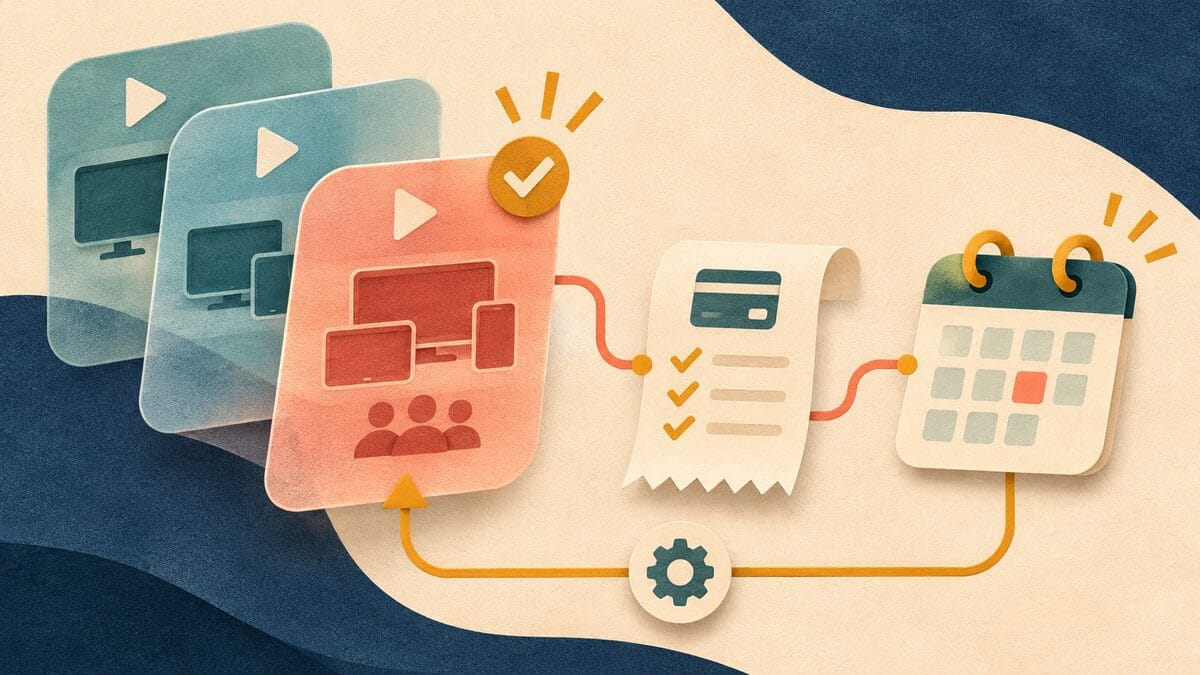
HBO Max plan searches reveal a compact consumer problem: a person may know the programme they want, yet still lack a clear record of plan features, billing ownership, add-ons, renewal terms, and local availability. The result can be duplicated access, a plan that suits one viewer while frustrating another, or a cancellation task assigned to the wrong person.
Interactive companion: Build a browser-only PlanLedger subscription brief. It turns general viewing choices into a private, device-local checklist of access, billing, and renewal questions.
The useful business opportunity sits in structured buyer guidance. An independent operator can help a household or small digital-support service prepare a dated comparison brief from provider-published information. The brief gives the client a way to verify the right questions before subscribing, changing a plan, or accepting a promotion. Its scope covers planning and provider questions. The provider and client retain control of access, credentials, payments, and availability claims.
A famous streaming app still leaves several decisions open
HBO Max began as a direct-to-consumer streaming service in 2020. Warner Bros. Discovery has expanded it across markets and partners, which gives viewers more ways to subscribe and more paths to manage. The company’s help centre says a base plan and a sports add-on can have different billing providers. It also lists direct billing, app stores, Prime Video Channels in selected markets, and internet, mobile, or television providers among the possible routes.
That is useful distribution for the platform. It creates a small administrative trap for households. A person who watches the service may have no access to the billing account. A family may remember a launch offer yet miss the renewal date. A plan comparison may list video quality and simultaneous screens while overlooking whether a provider controls changes or cancellation.
Availability adds another variable. Warner Bros. Discovery says HBO Max content, plans, prices, and partners vary by country or region. Its UK and Ireland launch announcement, for example, described direct subscriptions alongside Sky and Prime Video relationships, with sports access limited to the UK. The same service name can therefore describe different selections, extras, and management paths. A global guide earns trust by keeping those claims tied to a market and a source date.
The reader question is narrower than "Which plan should I buy?" A useful decision starts with four records: what people expect to watch, which devices and features matter, who controls the subscription, and when a price or access condition needs checking again. The four records expose unanswered questions before money changes hands.
The value sits in the handoff between viewing needs and account control
The large streaming platforms already solve content licensing, app development, payment processing, device support, marketing, and customer service at scale. Warner Bros. Discovery reported 131.6 million global streaming subscribers at the end of the fourth quarter of 2025. Its full-year results reported $37.3 billion in company revenue, while noting that streaming subscriber growth helped offset pressure elsewhere in the business. Those figures describe a broad corporation, not revenue from one HBO Max plan or one country.
They do show why the consumer-facing comparison layer matters. A huge subscription business converts a catalogue into recurring billing, partner distribution, and advertising-supported options. A small entrant lacks the catalogue, rights, capital, and distribution that make that system work. Recreating a streaming service would be an implausible route for an ordinary operator.
The accessible layer is preparation. A short, neutral brief can assemble the information a client needs for their own decision: plan name, declared device needs, number of viewers, billing route, promotion end, ordinary price confirmation, add-on status, and source links. The client then verifies local availability and completes each account action themselves.
This distinction gives the article its practical thesis. Subscription comparison becomes valuable when it produces a usable ownership record. A page that repeats headline prices leaves the core ownership questions unresolved. The record helps a client retain control while making provider claims easier to check.
A four-part brief makes the uncertainty visible
The comparison can be done with a simple paper form or a browser-only worksheet. It should begin with general information and exclude passwords, payment-card details, viewing history, account recovery codes, and identity documents.
- Viewing requirement: List the two or three programmes, genres, live events, language preferences, or household routines that drive the choice. Mark each as essential, useful, or optional. A specific title can move between services, so a client should confirm its local availability on the provider’s own page before subscribing.
- Use environment: Record the number of regular viewers, relevant televisions, mobile devices, download needs, accessibility requirements, and desired viewing quality. The exercise turns feature labels into household requirements.
- Ownership path: Record the person or organisation that will receive the charge, the intended billing provider, and the support route. HBO Max advises subscribers to find the billing provider inside the account or through the relevant provider. That one field can prevent a later cancellation search from starting in the wrong place.
- Renewal checkpoint: Record any quoted promotion, its end condition, the standard price to confirm, plan limits, and a reminder date. Provider terms can change, so the worksheet should preserve a link and capture date instead of treating a comparison page as a permanent promise.
The method has a clear limit. A brief cannot determine which entertainment service delivers the best value for every person. It can make the assumptions visible. A household can then decide whether a plan matches its viewing and ownership constraints.
The economic case for a paid ownership brief
A creator may be tempted to build an HBO Max deal page and rely on affiliate links or advertising. That route has weak control over the underlying offer. Promotions expire, partner availability changes, search results favour large publishers, and a commission can steer advice toward the highest-paying route instead of the best fit.
A limited-scope guidance service has a cleaner value exchange. The customer pays for a short interview, a dated requirements record, a verified-question list, and an explanation of what they must confirm with the provider. The operator earns for organising information and reducing repeated confusion. The provider retains control of sales, plan changes, payments, and cancellations.
The economics work only when the service has a firm boundary. Consider a fixed fee that covers one household, up to three existing video subscriptions, a one-page needs record, and a list of public-source questions. The operator can prepare it in a defined session. Continuous catalogue tracking, title promises, account recovery, provider calls, and cancellation authority turn a short service into open-ended support work.
There is a useful calculation behind that boundary. If a client has three subscriptions and each has a separate billing owner or renewal date, the client has at least three points to confirm before changing their setup. The brief makes no savings claim. It reduces the chance that an unrecorded billing path or renewal condition becomes an unpleasant surprise. That is a modest outcome, yet it is concrete and checkable.
The comparison method uses three inputs for each subscription: the billing route, the person responsible for the account, and the renewal checkpoint. A household with three subscriptions therefore has nine fields to verify. That small calculation gives the operator a fixed scope and gives the client a record that separates provider facts from household decisions.
Trust is the potential moat. Generic comparison pages are easy to copy. A local digital-support operator who records requirements carefully, writes clear provider questions, and avoids commission-led steering can build referrals from families, community organisations, and people supporting less technical relatives. The work remains light on fixed costs and heavy on judgment, accuracy, and communication.
The smallest sensible test is a five-brief pilot
The least expensive credible test requires no inventory, advertising campaign, incorporation, or custom software. Speak with five people who have considered adding, changing, or cancelling a video subscription. Ask which question delayed their decision: content availability, device use, billing ownership, promotion end, accessibility, or cancellation.
Offer a tightly bounded pilot to one person who describes a real unresolved decision. Use public provider pages and the person’s general requirements. Deliver a one-page brief with four sections: needs, provider facts to verify, account owner, and renewal checkpoint. The client completes every login and payment step.
The test succeeds when the person can name the questions they still need to verify and choose their next provider action without handing over credentials. It fails when every prospective client expects the operator to guarantee catalogue access, negotiate an offer, manage a household account, or monitor changes forever. That failure is valuable evidence. It identifies a support model with a different cost and responsibility level.
A publisher can test a content version with the same discipline. Publish one country-labelled explanation of billing ownership and one neutral checklist for a clearly defined audience, such as adult children helping a parent organise household subscriptions. Measure completed checklist downloads, replies that identify a specific unresolved decision, and requests for a bounded brief. Raw page views show attention. Completed decision records show a stronger need.
Who can use this opportunity well
This work suits a patient digital-support operator, consumer-education publisher, community technology programme, or organiser who already works with household records. The core skills are listening, documenting, checking provider sources, and explaining a boundary without making a purchase decision for someone else.
It suits people who can state uncertainty plainly. HBO Max and its partners control catalogue rights, local plans, prices, offer terms, supported devices, and account actions. An independent guide should label provider claims, identify market limits, and hand final verification to the client.
It fits poorly for an operator seeking quick affiliate income, a person prepared to publish copied offer details, or anyone who plans to collect sensitive account information. A generic plan chart has almost no defensible advantage. A well-run brief can earn trust because it records a client’s requirements and respects their control of the account.
The risks belong in the offer design
The clearest risk is accuracy drift. Streaming offers, catalogues, partner bundles, and billing flows can change. Each brief should state the provider page used and the date the client checked it. A service should leave price confirmation and purchase with the customer.
The second risk is incentive conflict. Affiliate income may create pressure to recommend a particular route. A new operator can avoid that conflict during the pilot. If a publisher later uses commercial links, the relationship needs a clear disclosure and the decision worksheet should remain useful without clicking anything.
The third risk is scope creep. Clients may ask for passwords to make the task easier. The safer design is a question sheet, a screen-share explanation where appropriate, or instructions that the client follows on their own device. This protects both parties and keeps the service out of account recovery, payments, and identity verification.
Consumer, contract, and cancellation rules vary by country. A guide can explain general recordkeeping and direct readers to provider help pages. It should leave legal questions, disputed charges, and formal consumer claims to qualified local channels.
A plan becomes easier to judge when ownership is clear
HBO Max illustrates a wider subscription problem. Entertainment choices feel immediate, while billing ownership and renewal conditions remain in the background until a change is needed. A short ownership brief brings those conditions into the buying decision.
For a small operator, the strongest version of this idea is a narrowly scoped preparation service or decision tool. It helps a client capture requirements, identify the billing path, and verify live provider information before committing. The five-brief pilot can reveal whether people will pay for that clarity. A paid response gives the service a grounded starting point. An absence of paid response avoids a larger investment in a crowded deal-content market.
Sources
- Warner Bros. Discovery: Fourth quarter and full-year 2025 results
- HBO Max Help: Manage an HBO Max subscription
- Warner Bros. Discovery: HBO Max launches in the UK and Ireland
- Warner Bros. Discovery: 2025 annual reports and proxies