Podcast Microphones and the Cost of a Bad Room
A podcast microphone can reveal a problem that an expensive purchase cannot solve: a creator may be recording in the wrong place, at the wrong distance, with no repeatable setup. The useful small-business layer is a recording-readiness session that turns those variables into a clear handover.

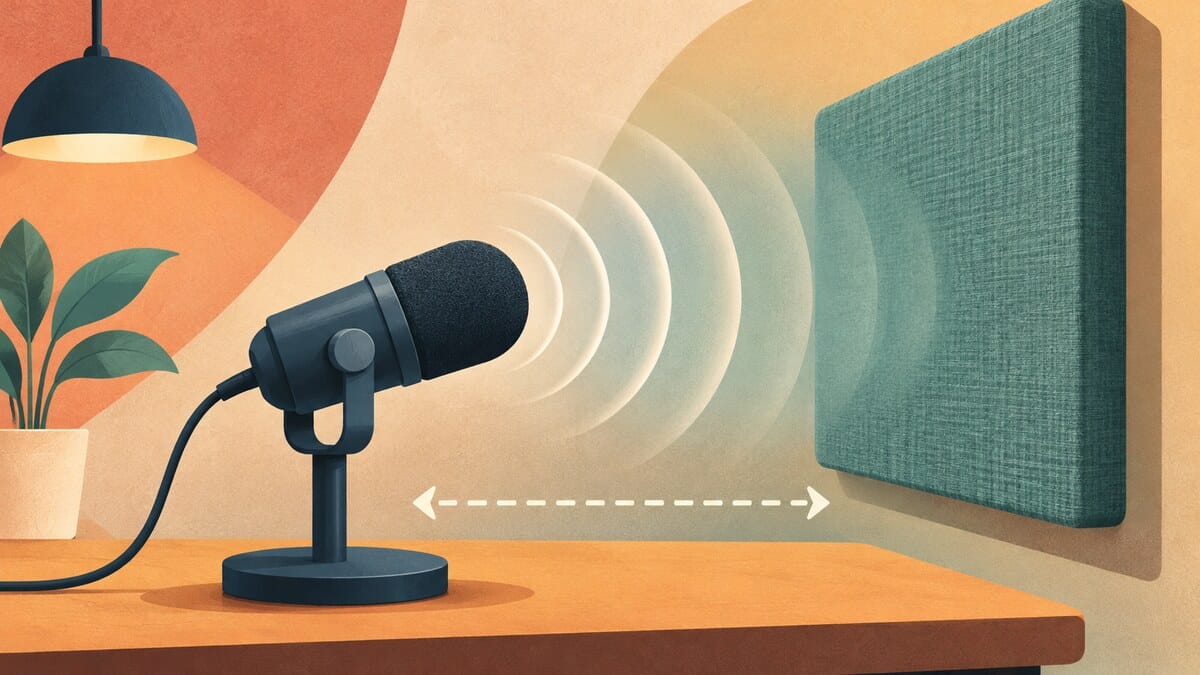
A podcast microphone is an unusually tempting purchase. It sits at the centre of the frame, promises a richer voice, and seems to offer a quick path from an ordinary room to a serious show. The buyer's real problem is usually wider: room reflections, background noise, a poor speaking position, an unstable stand, confusing connection choices, and no repeatable way to check the result.
That gap creates a modest service opportunity. A capable local audio worker, podcast editor, music tutor, or creator with recording experience can sell a tightly bounded recording-readiness session. The service delivers a paid visit or remote review that helps one person make a sensible equipment choice, capture a short test, improve the recording position, and leave with a plain-language setup record. Its defined scope covers setup clarity for one creator. Studio design and full production call for separate services.
The distinction matters. A seller who starts with an expensive microphone recommendation competes with large retailers and well-known reviewers. A small operator can compete on context: the client's actual room, voice, recording device, show format, budget, and ability to repeat the setup next week.
The microphone is only one part of the recording chain
People buy podcast microphones for several durable reasons. A new host wants to sound credible. A business wants clearer interviews and customer stories. A teacher, consultant, musician, or community organisation wants spoken material that listeners can follow without strain. The same questions recur across countries: USB or XLR, dynamic or condenser, desk stand or boom arm, how close to speak, and why a recording still sounds hollow after an upgrade.
Spotify's creator guidance makes the practical hierarchy unusually clear. It advises creators to choose equipment for their format and says the recording environment matters more than expensive gear. Its equipment guide also points out that phones and laptops can be useful starting points, while their built-in microphones have limits in noisy or echoing rooms. Spotify's production guide and equipment guide describe the same underlying job: capture intelligible speech before editing tries to repair it.
The signal chain gives a small operator a useful diagnostic order. First, listen for the room: hard walls, a bare desk, a noisy appliance, traffic, ventilation, or other interruptions. Second, check the voice-to-microphone distance and angle. Third, verify the connection and recording level. Fourth, make a short recording and listen through ordinary headphones. The microphone choice belongs after those checks, because a different model leaves room echo and distant speech unresolved.
Shure's recording guidance similarly recommends close placement for spoken word and warns that more distance captures more ambient sound. Its educational note on microphone techniques also explains proximity effect, which can make a directional microphone sound overly bass-heavy when a speaker moves too close. These are basic principles, yet they remain exactly where a first-time buyer can lose confidence.
Audio companies sell equipment, while a small operator can sell clarity
The microphone category already has experienced manufacturers, distributors, retailers, publishers, and marketplaces. They make money through product sales, accessories, software, dealer relationships, professional installation, and recurring replacement or upgrade purchases. Their advantages include product development, inventory, warranties, supply chains, marketing reach, and a broad catalogue.
Yamaha illustrates the scale behind the category. Its Annual Report 2025 says that demand for professional audio equipment helped offset weaker musical-instrument sales in the reported fiscal year. Yamaha's investor-relations data page reported revenue of ¥237.9 billion for the first half of fiscal 2027, while also saying consumer-audio revenue declined. Those figures measure a business far broader than podcast microphones. They show why a newcomer should avoid trying to imitate a manufacturer or a general audio retailer.
The accessible layer is preparation. A recording-readiness operator earns a fee for observing one setup, explaining the trade-offs, and leaving the client with a tested starting point. The client pays for reduced trial and error. The operator is paid for time, listening skill, and a clear boundary around the work. Any microphone, interface, electrical repair, acoustic construction, or software subscription is a separate decision for the client.
That boundary also protects trust. The operator should avoid holding client passwords, publishing access, payment details, or private recordings beyond the agreed test. They should obtain consent before recording anyone, keep a short retention policy for test files, and refer electrical work, permanent construction, or advanced acoustic treatment to qualified providers.
A useful offer has a narrow finish line
The strongest first offer is a single-host readiness session for one ordinary recording location. It could include a short pre-visit questionnaire, a review of the client's intended format, a check of existing equipment, three short test recordings, a placement adjustment, and a one-page handover. The handover can state the recommended location, chair and microphone position, distance cue, connection path, level-check routine, and the one or two upgrades that would solve the clearest remaining problem.
The service should have a defined finish. It promises a setup assessment, an audible before-and-after comparison, and a repeatable starting configuration. Audience growth, broadcast-studio design, and universal microphone recommendations sit outside that promise.
A practical first version could use this time budget: 15 minutes to review the creator's format and room, 25 minutes to test placement and capture samples, 20 minutes to compare the recordings and make adjustments, and 15 minutes to explain the handover. That is 75 minutes of visible work before travel, preparation, follow-up, and payment costs. The calculation exposes the economic constraint. A fee must cover the entire appointment.
For example, four sessions a month at a local equivalent of EUR 75 produce EUR 300 in gross session fees. The example excludes travel, tax, payment processing, equipment, marketing, and the operator's unpaid preparation time. Treat it as a demand-validation scenario. It tells a prospective operator that a handful of appointments can test whether clarity has value, while meaningful revenue would require repeatable referrals, remote reviews, a higher-value package, or an adjacent service such as editing and production support.
Three routes fit different skills and customers
An audio editor can sell a remote recording review. The client sends a short sample recorded in their usual room, plus photos or a simple sketch of the setup. The editor returns a structured note on room noise, microphone distance, gain, and the next equipment decision. This route has lower travel time and depends on the operator's ability to explain sound clearly without being present.
A local podcast or music tutor can offer an in-person readiness visit. The customer gets a live test and a handover that makes the advice easier to repeat. This route carries more travel and scheduling cost, so it works best in a compact service area or through partnerships with co-working spaces, schools, community studios, or business networks.
A creator with a focused audience can build an educational route. Instead of publishing a generic list of microphones, they can create comparison material around a defined situation: one-person narration in a reflective room, two-person desk interviews, or remote guests. Transparent affiliate disclosure is essential where affiliate links are used. The content route needs distribution and patience; it also benefits from the same recording knowledge used in the service.
The three routes can reinforce each other. A remote review reveals recurring questions. Those questions improve the handover, guide a useful video or article, and help an operator decide whether a local session has enough demand. The work becomes more defensible when the operator develops a repeatable intake, carefully labelled test clips, a library of room-specific fixes, and referral relationships. The microphone itself is easy to copy. A reliable diagnostic method and local trust take longer to assemble.
The smallest sensible test is a paid listening session
Keep initial spending below the cost of a studio lease, a large microphone inventory, paid advertising, or a catalogue of equipment bundles. Start with ten conversations with people who have tried to record a podcast, course, interview series, or business video. Ask for a 30-second sample only with permission. Listen for the same problem: echo, inconsistent level, distant speech, fan noise, a poor connection, or uncertainty about what to buy next.
Then offer three fixed-scope paid sessions to people whose problem fits the service boundary. Use the same intake questions and the same short handover each time. Track three outcomes: whether the client can repeat the setup without help, whether they act on one recommendation, and whether they refer another creator or ask for a follow-up. A paid appointment and a repeatable result provide stronger evidence than compliments about a microphone.
Set a stop rule before the test. Pause or narrow the offer if people want complex editing, full video production, acoustic construction, or technical support outside the operator's experience. Those requests may reveal demand, yet they also reveal that the initial service has grown beyond a safe, credible scope.
The risks sit in expectations, privacy, and weak differentiation
The most common commercial risk is selling equipment advice when the client expects a finished show. State the deliverable in writing: a setup assessment, short test recordings, and a handover. State what remains with the client: content, publishing, branding, platform accounts, ongoing production, and final equipment purchases.
Privacy matters because practice recordings can contain personal information or unreleased business material. Get explicit permission, retain test files only as long as needed, and avoid using clips in a portfolio without a separate written agreement. Local consumer, privacy, tax, and business-registration rules vary by country, so operators should check the requirements that apply where they work.
Competition also changes the case. Free tutorials are abundant, and retailers offer product advice at scale. A small service has room only when it can deliver a more specific result: evidence from the client's own room, a clear purchase boundary, or a handover that makes the next recording easier. Generic recommendations and unqualified promises about sound quality are poor foundations for trust.
Careful audio guidance creates the strongest small-service fit
Podcast microphones are worth attention for people who already understand voice recording, enjoy diagnosing small technical problems, and can explain boundaries without condescension. Editors, tutors, community-studio staff, and creators with a credible audio portfolio have a stronger starting point than a general online reseller.
The first decision should be modest. Test whether creators will pay for a structured listening session that gives them a repeatable setup and one clear next purchase decision. If the same room and setup problems recur, the operator has evidence for a narrow service. If clients only want a discounted microphone, the value is sitting with retail distribution rather than a new service.
Sources
- Spotify for Creators: Podcast production
- Spotify for Creators: Podcast equipment guide
- Shure: Microphone techniques for recording
- Yamaha Annual Report 2025
- Yamaha investor relations data