AI-Assisted Payments in Latin America: The Business Opportunity Behind Agentic Commerce
Latin America’s next payment story is not only wallets and cards. AI agents, real-time payments, trust, and merchant readiness are creating a practical new market for operators who can make digital commerce safer and simpler.

Why People Are Searching for AI-Assisted Payments in Latin America
AI-assisted payments are becoming a serious business topic in Latin America because the region already has the ingredients that make payment innovation matter: mobile-first consumers, fast-growing digital wallets, real-time payment systems, large informal and small-business markets, and shoppers who still care deeply about trust.
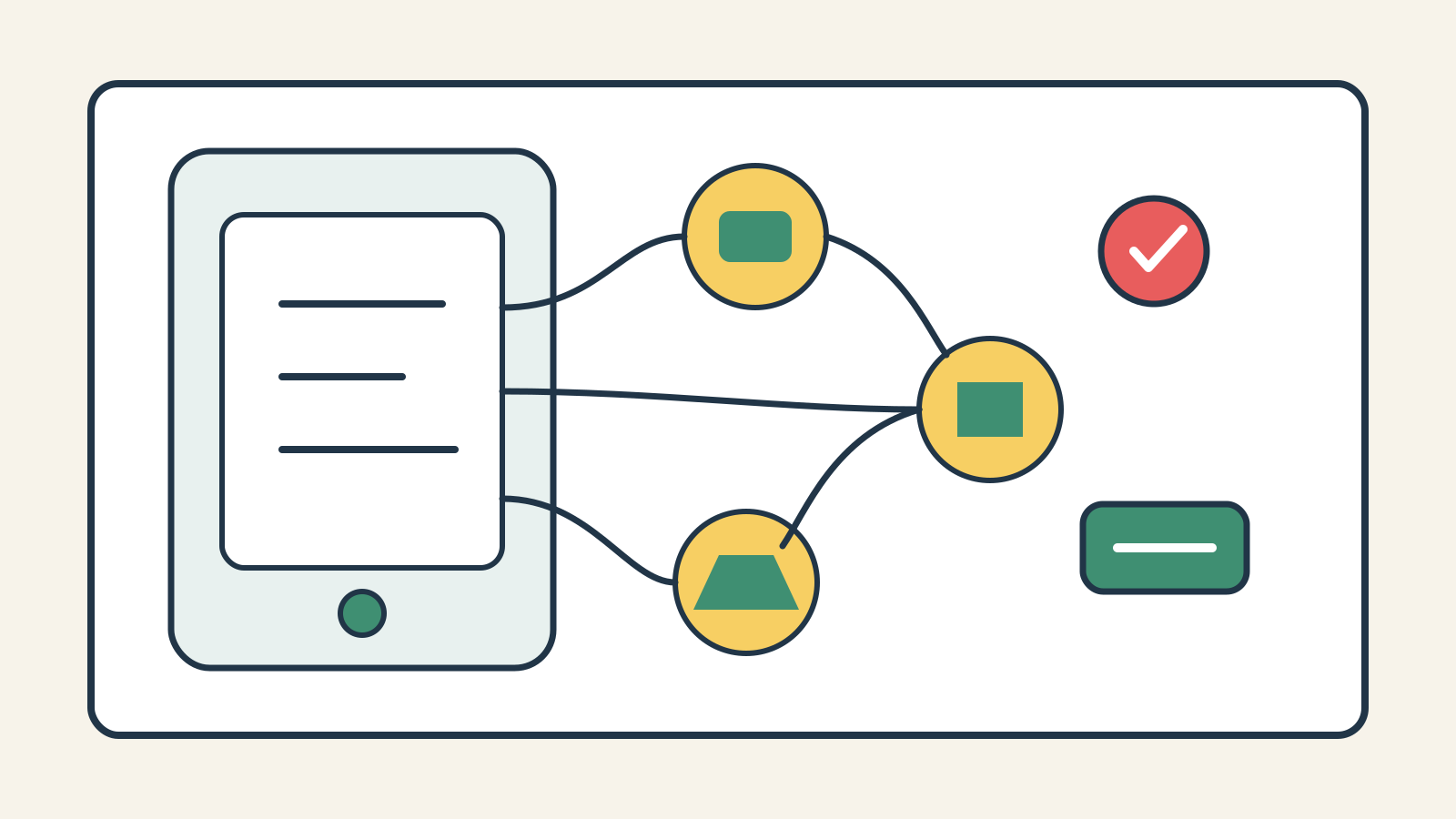
The new layer is agentic commerce. Instead of a customer manually searching, comparing, adding to cart, and paying, an AI agent may help monitor availability, compare prices, choose a merchant, initiate a payment, or coordinate delivery after the customer gives permission. That sounds futuristic, but the direction is already visible.
Santander and Visa announced controlled pilot transactions across multiple Latin American markets, including Argentina, Brazil, Chile, Mexico, and Uruguay, powered by Visa Intelligent Commerce. Visa has also highlighted AI agents, tokenization, real-time payments, stablecoins, biometrics, and small-business digitization as major payment themes for Latin America and the Caribbean.
For South America in particular, the opportunity is practical. Brazil has Pix. Argentina has heavy wallet use. Chile, Colombia, Peru, and Uruguay have growing digital-payment habits but different levels of merchant acceptance, regulation, and consumer trust. A business that helps merchants prepare for AI-assisted payments does not need to predict the whole future. It needs to solve today’s friction: product data, payment acceptance, fraud controls, checkout reliability, customer education, and support.
The Short History Behind AI-Assisted Payments
Latin America has often moved quickly in payments because the old system left gaps. Cash remained important, bank access was uneven, card acceptance could be expensive for smaller merchants, and cross-border commerce was complicated. Digital wallets, instant transfers, QR payments, marketplaces, and mobile commerce filled many of those gaps.
Brazil’s Pix showed how quickly real-time payments can become part of everyday life when the system is useful, low-friction, and widely accepted. Wallets and account-to-account payments have also changed how consumers pay in Argentina, Peru, Colombia, Chile, and other markets. The exact mix varies by country, which is why a South America payment business must avoid one-size-fits-all advice.
The AI step builds on that foundation. A normal digital checkout still asks the customer to do most of the work. An AI-assisted flow can help the customer decide what to buy, check whether the merchant can fulfill the order, choose a payment rail, verify consent, and complete the transaction safely.
That does not remove the need for trust. It raises the standard. If an agent is going to act on a customer’s behalf, the customer needs clear permission controls, strong security, reliable refunds, accurate product data, and confidence that the merchant is legitimate.
The Business Opportunity
The strongest opportunity is not selling “AI payments” as a slogan. It is helping merchants and fintechs become ready for the next checkout interface.
The customer problem is clear. Many small and mid-sized merchants in Latin America still struggle with fragmented payment options, inconsistent product listings, slow support, fraud anxiety, refund confusion, and weak integration between online discovery and payment. If AI agents become part of the shopping journey, those weaknesses become more visible.
That creates several practical business models:
- merchant readiness audits for AI-assisted checkout
- payment-acceptance setup for small businesses selling through social commerce, marketplaces, and websites
- product-feed cleanup so agents can understand prices, stock, delivery zones, and return rules
- fraud and trust education for merchants and consumers
- checkout-testing services across cards, wallets, bank transfers, QR codes, and local payment methods
- content and lead-generation sites that explain digital payments by country and use case
- training for agencies, accountants, and small-business advisers serving local merchants
The business case works best when the provider chooses a narrow segment. A restaurant accepting delivery orders has different needs from a fashion seller on Instagram. A tourism operator in Chile has different payment concerns from a grocery seller in Brazil. A marketplace merchant shipping across borders has different issues from a neighborhood service business.
Search interest and public announcements are demand signals, not guarantees. The case becomes stronger when a merchant already loses sales at checkout, receives repeated payment questions, or lacks the data that an AI-assisted commerce system would need.
Who Is Already Making Money From AI-Assisted Payments
Visa is one of the central public companies monetizing this shift. It earns revenue from payments infrastructure, value-added services, processing, security, tokenization, acceptance, and partnerships across the payment ecosystem. Its Latin America payment outlook points to AI agents, tokenization, real-time payments, stablecoins, biometrics, and small-business digitization as important themes.
Santander is involved through banking relationships, merchant services, card issuing, acquiring partnerships, accounts, and digital financial services. Its Visa pilot matters because banks already hold trust, identity, compliance, and customer-account relationships that are hard for a standalone startup to replicate.
Mastercard is another major beneficiary of digital-payment adoption. Its regional study said nearly nine in ten consumers in Latin America and the Caribbean are ready to use digital payments in everyday transactions, while security remains a key condition for growth. That combination is important: adoption is broad, but trust still decides whether people use the system consistently.
Marketplaces and wallet providers also monetize the behavior. MercadoLibre, Mercado Pago, Nubank, local banks, payment processors, acquirers, fraud-prevention vendors, ecommerce platforms, and logistics providers all sit near the transaction. Some make money from payment fees. Others monetize credit, subscriptions, advertising, merchant tools, cross-border services, risk scoring, or value-added software.
For a small operator, the lesson is not to compete directly with Visa or a major bank. The opportunity is in the service layer around adoption: education, setup, testing, content, integration, support, and category-specific advice.
Ways to Make Money With AI-Assisted Payments
A consultant can sell payment-readiness audits to small and mid-sized merchants. The audit can check payment options, checkout completion, refund language, fraud controls, customer support scripts, product data, and whether prices, stock, and delivery rules are clear enough for automated commerce flows.
An agency can package social-commerce payment setup. Many sellers in South America use WhatsApp, Instagram, marketplaces, and local delivery channels before they build a polished ecommerce site. A useful offer could connect payment links, wallet acceptance, order forms, basic inventory, automated customer replies, and clear return policies.
A developer can build lightweight tools for payment testing. Merchants need to know whether checkout works on mobile, whether payment confirmations are clear, whether failed payments are handled properly, and whether customers receive the right next step. Testing across local methods can be valuable.
A publisher can build country-specific payment education. Articles can explain Pix for small merchants, wallet acceptance in Argentina, card tokenization, chargebacks, QR payments, secure payment links, cross-border checkout, and how AI agents may change shopping. Monetization may come from display ads, sponsorships, affiliate programs, software referrals, or consulting leads, with clear disclosure.
A fintech educator can create workshops for accountants, small-business advisers, and trade groups. Many merchants trust local advisers more than global technology vendors. Training those advisers can create a durable channel.
A product-data specialist can help merchants prepare feeds for agentic commerce. If an AI agent needs accurate price, stock, delivery, merchant identity, return policy, and product attributes, messy listings become a revenue leak. Cleaning that data is not glamorous, but it is commercially useful.
Example Offers You Could Create
- A “payment friction audit” for small ecommerce stores in Brazil, Argentina, Chile, Colombia, Peru, or Uruguay.
- A WhatsApp-to-payment-link setup package for service businesses and local sellers.
- A merchant guide to accepting digital payments safely without confusing customers.
- A checkout mystery-shopping service that tests mobile payment flows and failed-payment recovery.
- A product-feed cleanup package for marketplace sellers preparing for AI-assisted discovery.
- A country-specific newsletter on wallets, instant payments, fraud, chargebacks, and commerce automation.
- A training kit for accountants and small-business consultants advising merchants on digital-payment adoption.
The best offer should reduce a visible business pain: fewer abandoned checkouts, fewer customer questions, fewer payment disputes, faster payment confirmation, or better merchant trust.
How to Start Small
Start with one country and one merchant type. For example, choose Brazilian beauty sellers using Pix and cards, Argentine Instagram sellers using wallets, Colombian local service businesses using payment links, or Chilean tourism operators taking reservations from foreign customers.
Then map the current payment journey. How does the customer discover the product? Where do they ask questions? How do they pay? What happens when payment fails? How does the merchant confirm the order? What causes refunds, disputes, or support messages?
Next, build a simple checklist. Include accepted payment methods, mobile checkout speed, payment confirmation, refund language, delivery rules, fraud warnings, customer support scripts, and product-data quality. Test five merchants manually before building software.
The smallest sensible paid test is an audit plus implementation package for one merchant. Fix two or three concrete problems: add a clearer payment option, improve checkout instructions, create a support script, clean product information, or test failed-payment recovery. Measure practical outcomes such as fewer payment questions, faster order confirmation, more completed payment links, or fewer abandoned orders.
If merchants repeatedly ask for the same fix, package it. If every case is custom and low-budget, narrow the niche.
Risks and What to Watch Out For
The first risk is regulation. Payments, credit, stored value, customer data, consumer protection, tax documentation, anti-money-laundering rules, and cross-border transactions can all be regulated differently by country. A global article can explain the concept, but operators should check local rules and get qualified advice before handling funds, sensitive data, or regulated financial activity.
The second risk is overclaiming AI capability. An AI agent should not be treated as an independent financial adviser or a magic checkout operator. Consent, limits, transparency, and human fallback matter. The merchant and payment provider still need accountability.
The third risk is fraud. As payments become easier, fraud attempts can also become more sophisticated. Merchants need identity checks, transaction monitoring, clear refund rules, phishing education, and safe communication channels.
The fourth risk is trust. Mastercard’s regional research emphasizes security as a major condition for payment choice. If customers do not trust a payment link, wallet flow, or AI-assisted purchase, convenience will not save the sale.
The fifth risk is fragmentation. Latin America is not one payment market. Brazil, Argentina, Chile, Colombia, Peru, Uruguay, and other countries have different banking systems, currencies, inflation histories, consumer habits, and local rails. A business that ignores those differences will sound generic quickly.
Who This Is Best For
This opportunity is best for fintech consultants, ecommerce agencies, payment specialists, small-business educators, product-data operators, developers, accountants, and publishers who understand local commerce. It is also a good fit for people who already serve merchants and can add payment-readiness work to an existing relationship.
It is less suitable for beginners who want to hold customer funds, issue financial advice, or build regulated payment products without expertise. The safer entry point is education, setup, testing, content, or referral partnerships with licensed providers.
Final Takeaway
AI-assisted payments in Latin America are worth watching because they connect two real shifts: consumers are already moving deeper into digital payments, and AI agents are starting to influence how people discover and complete purchases.
The practical opportunity is not to invent a new payment network. It is to help merchants become ready for the next layer of commerce: cleaner data, safer checkout, better payment acceptance, clearer customer communication, and stronger trust. For operators who understand local markets, this can become a useful service business, content niche, or software wedge. For anyone selling vague AI-payment hype, the market will be less forgiving.
Sources
- Think with Google: Retail trends in Latin America
- Think with Google: Ecommerce challenges in Latin America
- Visa: Payment trends in Latin America and the Caribbean
- Santander: AI-agent payments pilot with Visa
- Mastercard: Digital payments study in Latin America and the Caribbean
- World Economic Forum: Latin America in the Intelligent Age