The iPhone Upgrade Has a Handoff Problem
The difficult part of changing an iPhone is often not moving photos. It is preserving the chain between a phone number, account recovery, authenticator codes, and the old device before trade-in or erasure makes a simple mistake expensive.

A copied phone can still leave its owner locked out
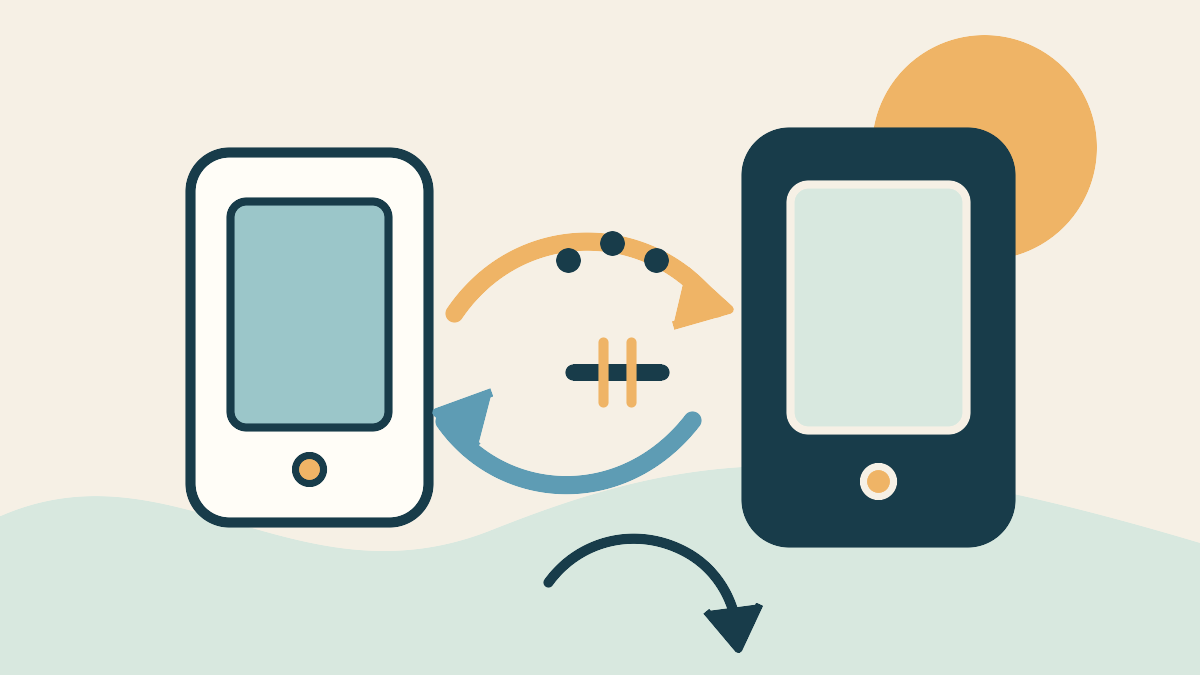
An iPhone upgrade looks like a transfer task until it becomes an access task. Photos, messages, and many apps may arrive on the new device, while the owner still needs a working mobile number, a route back into important accounts, and confidence that the old phone can be erased or traded in safely.
That gap is visible in the questions people ask after a move goes wrong. Community posts describe an eSIM that will not transfer, authentication codes sent to a number that has stopped working, and authenticator entries discovered missing only after the old device has been returned. Those reports do not prove how often each problem occurs. They do show why a reassuring promise to “move everything” is a poor description of the job.
Apple’s own setup material makes the dependency visible. Its Quick Start guidance relies on the previous device being available, and its iCloud transfer guidance calls for Wi-Fi, Bluetooth, power, and the old-device passcode during setup. Its cellular-service guidance says eSIM Quick Transfer is available only with supporting carriers. A transfer can therefore contain several different jobs with different owners.
The practical opportunity is not a concierge who takes over someone else’s phone. It is a transition-readiness service that helps an owner see the handoffs before they become irreversible.
Four gates sit between an old phone and a clean trade-in
A useful transition plan separates four gates that are often treated as one.
Data gate. The owner chooses an official transfer or backup route and checks that the content they care about is present. The point is not to promise that every app behaves identically. It is to make a short list of items that need individual attention, such as locally stored files, downloads, app settings, or health and device-pairing records.
Number gate. The owner confirms how their carrier will move the mobile service. Quick Transfer may be available, a carrier app or QR code may be required, or the carrier may need to intervene. The old phone should remain available until the owner has tested a call, message, and mobile connection on the new one. The owner, not a helper, should deal with carrier identity checks.
Recovery gate. The owner lists the accounts that depend on the old number, a device prompt, an authenticator, a recovery code, or a hardware key. They should confirm a second recovery path where the service permits it. No checklist can certify every account. It can stop an owner from discovering their most important dependency after a return window closes.
Retirement gate. Only after the first three gates have been checked does the owner prepare the former phone for sale, gift, trade-in, reuse, or recycling. Apple’s trade-in preparation guidance explains the account and erase steps, including the relationship between erasing a device and removing Activation Lock. That sequence belongs to the owner because it has security consequences.
This four-gate model is the MarketLens contribution. It turns a vague promise of setup help into a testable claim: does the client leave with a clear owner, official route, proof point, and stop condition for every gate?
The service gives the owner a transition map
A trustworthy offer could be called an “iPhone transition readiness pack.” It would take place before a new device is configured or an old one is surrendered. The client brings their own notes and devices. The provider asks questions, records answers in a client-owned checklist, and points the client to the official Apple, carrier, financial institution, or app-provider instructions that fit the issue.
A fixed-scope pack might include a 30-minute discovery call, a printed or encrypted client-held transition map, and a short verification appointment. The map could have four columns: dependency, owner, official route, and proof. “Primary number” might point to the carrier’s transfer instructions and a successful test call. “Authenticator app” might point to that app’s documented migration procedure and a client-performed sign-in test. “Trade-in” might point to the chosen buyer’s conditions and Apple’s erase guidance.
The boundary is the product. The provider should never request or record a passcode, Apple Account password, recovery code, card number, bank login, SIM PIN, or authentication code. They should not operate the phone unsupervised, reset it, erase it, accept a device for trade-in, impersonate the customer with a carrier, or claim to recover lost data. When a client hits an account-specific problem, the correct next step is the relevant official support channel.
That restraint reduces privacy risk and makes the service easier to explain. The client pays for preparation, sequence, and a calm second pair of eyes. They retain every secret and every irreversible action.
Why the handoff also matters for reuse and waste
An orderly transition helps an old phone reach its next sensible use. A device that remains tied to an account, contains personal data, or has not been checked properly may be left in a drawer, discarded through the wrong channel, or become difficult for a legitimate next owner to use. A clear retirement gate makes reuse, refurbishment, and formal recycling more achievable.
That is not a claim that a checklist alone changes environmental outcomes. It removes one practical obstacle between a usable device and a responsible handoff. Apple says its take-back and recycling programs operate or participate in collection in 99 percent of the countries where it sells products, and its environmental report describes reuse and material recovery as parts of circular supply chains. Better preparation can help reduce avoidable device waste by making the handover safer to complete.
The same principle sits beside the direction of repairability rules in Europe. The EU’s ecodesign rules for smartphones and tablets require, among other measures, availability of certain spare parts, information, and support for repair. A transition service does not repair a phone or certify regulatory compliance. It can respect the future-facing logic of repairable parts and longer use by treating a phone as an asset that may be retained, repaired, passed on, refurbished, or recycled instead of assumed to be disposable.
Where the money already moves
Apple shows the scale of the surrounding ecosystem, even though its financial reporting does not break out “upgrade support” as a separate business. In its fiscal 2025 Form 10-K, Apple reports iPhone net sales and Services net sales as separate reportable product categories. Hardware sales, cloud storage, app distribution, warranties, carrier activation, trade-in programs, repair, and resale each capture part of the broader transition moment.
Carriers earn from mobile service and activation relationships. Platforms earn from cloud, app, and subscription activity. Trade-in and refurbishment operators earn by turning a former owner’s device into verified used inventory or recovered materials. Local repair businesses earn from diagnostics, parts, labor, and customer trust.
A small entrant should not try to copy those capital-heavy layers. They do not need device inventory, carrier contracts, access to customer accounts, or a resale operation. Their accessible layer is preparation: a narrow, privacy-conscious service that lowers confusion before the client uses the established providers.
A realistic offer has modest economics and strict stop rules
The strongest customers are households helping a less confident relative, community digital-skills organizations, local repair shops that want a safer pre-service option, and independent technology helpers with a clear privacy policy. The buyer is paying to reduce the chance of a chaotic afternoon, carrier visit, or lost-account recovery process. They are not paying for guaranteed migration.
An operator could test a fixed fee for a preparation session and a separate verification session. The fee must cover time for intake, a tailored checklist, and a brief follow-up without encouraging the provider to rush into account access. An operator should calculate this plainly: if preparation, documentation, and follow-up take 75 minutes in total, the price has to fund those 75 minutes, travel if any, insurance, tax, and a reasonable allowance for no-shows. A low advertised price that turns every case into open-ended troubleshooting is not a viable service.
Three offers fit the boundary.
- A household transition map for one owner, with no passwords or device custody.
- A white-label checklist for a repair shop to give customers before a trade-in, repair, or replacement.
- A group workshop for a library, community organization, or workplace covering the four gates and official support routes.
Avoid reselling eSIM plans, handling passwords, offering remote screen control, or promising that all bank, identity, or authenticator apps will migrate. Those activities create platform dependence and liability that the simple service cannot price or control.
Test the preparation service before promoting it
Start with five interviews, not a website or a large technology purchase. Speak to people who have helped a parent, partner, or colleague change phones, plus a repair shop or community trainer. Ask which part created the longest delay: data, mobile service, account access, or trade-in. Ask what they would have wanted to know before the old device disappeared.
Build a fictional, non-sensitive transition map and run three paid pilot sessions. The client completes all sign-ins, account changes, and erase actions themselves. Track whether clients use the map, which gate causes questions, and whether the session ends with a clear next official route. Stop the test if people expect password handling, if each session becomes carrier support, or if the value depends on taking control of private accounts.
The business case becomes stronger only when the map saves time and reduces uncertainty without making the provider a custodian of somebody else’s identity.
The valuable handoff is the one the owner can verify
The iPhone transition service worth pursuing is deliberately narrow. It gives an owner a sequence for data, number, recovery, and retirement, then leaves every credential and irreversible action in the owner’s hands. That is a safer proposition for the customer and a more durable one for a small operator.
It also has a useful afterlife. A phone that has been transferred, cleared, and directed toward reuse, repair, refurbishment, or formal recycling is less likely to become forgotten electronic waste. The best result is not an impressive-looking transfer. It is a handoff the owner can prove is complete.