The Air Purifier Purchase That Can Turn Into a Filter Trap
A portable air cleaner can make a room more resilient when smoke arrives. The purchase becomes fragile when a buyer treats the machine as the product and discovers too late that the real dependency is a costly, unavailable or unverified replacement filter.

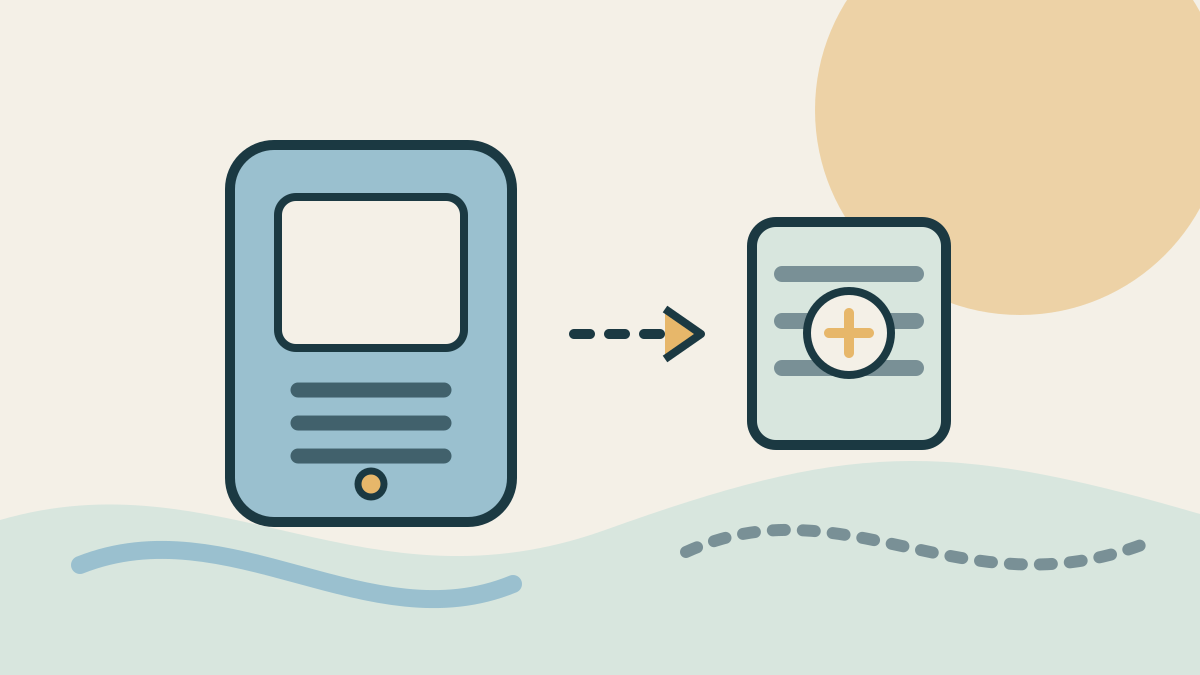
When smoke reaches a neighbourhood, people do not need another glossy appliance comparison. They need a room that can become a practical refuge, a product they can obtain before demand surges, and a filter they can replace without turning a working machine into e-waste.
That final point is easy to miss. A portable air cleaner is usually sold as a one-time hardware purchase, while its useful life depends on consumable filters, room fit and the conditions in which it runs. The United States Environmental Protection Agency advises choosing a filtration option before a smoke event, partly because options may be difficult to obtain during one. Its guidance also separates portable cleaners, HVAC filters and do-it-yourself cleaners. EPA’s wildfire filtration guide explains the choices and their limits.
The useful buying test has four parts: choose the room, check independently verified particle performance, confirm the replacement-filter route, and calculate a realistic ownership cost. For a small operator, that creates a limited service opportunity in procurement and readiness documentation for a defined organisation. It does not justify health guarantees, emergency stockpiling or a generic purifier shop.
The machine is only half of the product
Portable air cleaners pull air through a filter. For particle filtration, EPA says a cleaner should have a clean air delivery rate, or CADR, large enough for the room where it will be used. CADR measures particle-cleaning performance, not every possible pollutant. EPA also notes that no air cleaner or filter eliminates all indoor pollutants, and that gases such as odours may require a different filter medium such as activated carbon. EPA’s consumer guide sets out those boundaries.
That distinction cuts through a common buying mistake. A buyer sees “smoke” in marketing copy and assumes the machine solves the whole problem. Smoke contains particles and gases. A high particle-cleaning score does not prove that a small carbon layer will deal with odours or gases. A retailer or consultant should state that limit plainly rather than stretch a product claim into a health promise.
The other hidden dependency is the replacement filter. Recent community questions illustrate the practical problem: people report discontinued product lines, difficulty finding compatible filters, and a replacement bill that feels disproportionate to the original machine. One Reddit post describes a buyer unable to find a replacement for a discontinued cleaner. Another discussion focuses on filters priced at a substantial fraction of the appliance. These reports do not prove a market size. They do show that filter continuity is a real purchase question.
Start with a room, then use the smoke number
The air cleaner belongs to a room, not a whole house in the abstract. Measure the room where people will spend the most time with doors and windows closed when that is safe and practical. A larger room, higher ceiling, open doorway or significant air leakage can change what one machine can accomplish.
For an independently checked comparison, the Association of Home Appliance Manufacturers, or AHAM, publishes CADR standards and a searchable directory for participating products. Its general rule of thumb is a smoke CADR of at least two-thirds of the room area. For wildfire smoke, AHAM recommends matching the smoke CADR to the room area in square feet. AHAM’s air-filtration guidance explains the distinction.
Here is a simple calculation. For a 200-square-foot room with an ordinary ceiling, the wildfire-smoke rule points to a smoke CADR of about 200. Treat that number as a screening figure. A buyer should check the product’s verified label or directory listing, keep the room conditions in view, and use local public-health guidance during a smoke event.
The calculation changes the order of shopping. Instead of beginning with colour, app features or a claimed maximum coverage area, begin with the intended room and the smoke CADR. Then remove any model whose replacement filter route cannot be confirmed.
Filter continuity deserves its own pass-fail check
The filter question has four parts.
- Identity: Record the exact purifier model and the exact replacement-filter code. A family name is often too vague, especially when a manufacturer sells several revisions.
- Source: Check whether the manufacturer, an authorised distributor or a credible local retailer lists the filter. Marketplace listings may help with discovery, but they are not proof that a substitute has the same performance.
- Cost and interval: Record the official recommended replacement interval and the delivered local price. A low purchase price can hide a high recurring burden.
- Verification: Where available, look for independently verified replacement-filter performance. AHAM launched a programme to verify replacement air filters, recognising that consumers rely on those filters after the original purchase. AHAM’s programme announcement describes its scope.
This is not a demand to buy years of filters in advance. Storage, cash tied up in consumables, model revisions and local availability all matter. The point is to avoid buying a machine with no credible next filter.
A three-year scenario exposes the real comparison
Consider two hypothetical cleaners that both fit the same room and have suitable verified particle performance. Cleaner A costs the equivalent of US$180 and needs a US$90 official filter each year. Cleaner B costs US$260 and needs a US$35 official filter each year. Assume each needs one replacement filter per year and exclude electricity, delivery and tax because they vary by location.
After three years, Cleaner A costs US$450: US$180 for the machine plus three US$90 filters. Cleaner B costs US$365: US$260 plus three US$35 filters. The calculation does not say Cleaner B is better. It shows why the machine price alone is insufficient. Noise, actual CADR, warranty, local service and filter availability may still change the decision.
The same method can be used with local currencies and real quotes. Keep the inputs visible. If a buyer cannot confirm the filter price or source, the calculation should remain incomplete rather than inventing a cheap substitute.
Where money already moves, and where a smaller operator can fit
Established manufacturers make money from hardware, recurring filters, distribution and, in some markets, subscription or rental relationships. Coway reported domestic revenue of KRW 2,865.6 billion for 2025 across its broader domestic business, which includes wellness categories beyond portable air cleaners. Coway’s results release shows the scale of the broader consumer-appliance ecosystem; it does not break out portable-cleaner revenue.
That scale is important. Large brands can negotiate production, hold inventory, manage returns, publish support material and absorb a failed product line. A small entrant should avoid copying that model with emergency inventory or a white-label storefront. The customer will blame the seller when a supposedly compatible filter does not fit, a delivery is late, or a smoke event creates demand faster than stock can arrive.
The accessible layer is a readiness brief. A local energy adviser, facilities consultant, community organisation or specialist retailer could help a small office, childcare operator or community venue document one room’s dimensions, accepted product criteria, replacement filter identity, current local sources and renewal date. The customer pays for a clearer purchase decision and a record that survives staff turnover. The operator’s costs are research time, clear disclaimers and a process to keep links and availability checks fresh.
This is a procurement and documentation service with a firm boundary around medical, building-science and HVAC advice. If the decision involves modifying a heating or cooling system, increasing filter efficiency in a central system, or assessing ventilation, the sensible step is to refer the customer to a qualified local HVAC professional. EPA makes the same point when it says a higher-efficiency HVAC filter may require checking what the system can accommodate.
The smallest credible test is a one-room brief
Start with five conversations, not stock. Speak to a small organisation that has an obvious one-room need, such as a childcare provider, small studio, clinic waiting area or community room. Ask which room matters most, whether it has doors that can close, what machine it has used before, how filters were purchased, and whether staff would value a written renewal record.
Offer one paid, fixed-scope readiness brief. Limit it to a room measurement, a smoke-CADR screen where a verified figure is available, a current official filter path, a three-year cost scenario and a list of questions for an HVAC professional if central filtration is relevant. Do not install equipment, promise a health outcome, certify air quality or substitute for local emergency guidance.
Set a stop rule. Stop or narrow the service if people only want brand recommendations, expect emergency delivery, ask for medical assurances, or refuse to pay for a documented decision. A paid brief and a later request to update the filter record are stronger evidence than a social-media poll.
Who should pursue it, and who should avoid it
This suits an operator with an existing trust channel: a facilities adviser, local appliance specialist, community resilience group, energy consultant or retailer that can be transparent about commissions. It is especially suitable when the operator can work with a defined customer group and keep the offering to a documented room-level decision.
It is a poor fit for anyone who wants to sell emergency fear, make health claims, stock large volumes of unfamiliar filters, or present a portable cleaner as a whole-building solution. The purchasing problem is real, but the valuable work is accurate scoping and follow-through.
Final takeaway
A portable air cleaner can be a practical part of smoke readiness. The better purchase is the one that still works after the first filter change. Measure the room, check verified particle performance, confirm the filter path and price the ownership period before buying. A small business can test whether organisations will pay for that disciplined brief before taking on inventory or health-related responsibility.
Sources
- EPA: Indoor air filtration during wildfire smoke
- EPA: Guide to air cleaners in the home
- AHAM Verifide: air-filtration standards and CADR
- AHAM: verified replacement air-filter programme
- Coway 2025 results release
- Reddit: discontinued filter replacement request
- Reddit: replacement-filter cost discussion