Garmin fēnix 9: The Small Opportunity Is in a Better First Route
Garmin’s fēnix 9 makes a premium promise: better training and navigation from the wrist. The more practical small-business question is whether new owners need help turning that promise into one reliable first outing.

Garmin’s fēnix 9 begins at US$999.99, according to the company’s launch announcement. That price signals more than a new gadget cycle. It signals a buyer who has already spent heavily on a tool that combines training data, maps, routes and navigation.
The tempting conclusion is to sell watch bands, build an affiliate site, or buy accessories for resale. That is the easy story, and usually the weaker one. Generic accessories face price competition, inventory risk and marketplaces with more reviews, better purchasing terms and faster fulfilment.
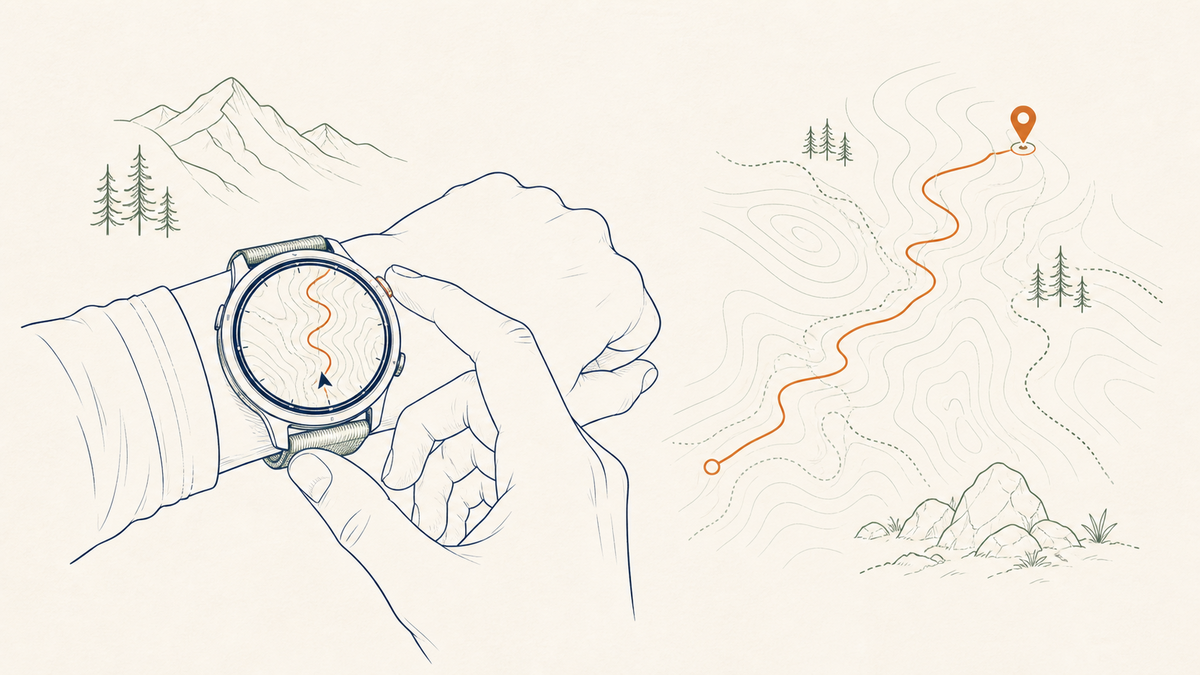
The more defensible small offer is narrower: help a new owner create, transfer and understand one route for a real activity. The offer is not safety advice, expedition planning or a promise that a route is safe. It is a fixed-scope first-use session that helps a runner, cyclist or club member use the tools they have already bought.
The fēnix 9 is expensive because it bundles several jobs
Garmin says the fēnix 9 is available in 43mm, 47mm and 51mm sizes, adds 64 GB of memory, and can store maps and music. The fēnix 9 Pro adds satellite and LTE connectivity in supported conditions. Those features matter because a buyer is not simply choosing a screen. They are choosing a device, account, phone app, maps, activities and settings that have to work together. Garmin’s announcement is clear about the product features, but it cannot make a new owner’s first route fit their local club, route type or confidence level.
That gap is modest, but it is real. Garmin’s own fēnix 9 manual describes separate steps to create a course in Garmin Connect, choose a course, send it to a compatible device, and follow the on-screen instructions. The manual is useful, but a person preparing for a particular ride or run can still be uncertain about where to start.
That is the article’s central judgment: the better entry point is not selling a premium watch ecosystem. It is reducing the first-use friction around one customer-owned device and one clearly bounded activity.
Where the money already flows
Garmin captures the large hardware and software ecosystem. Its 2025 annual results reported US$7.25 billion in total revenue. The company reported US$2.05 billion of outdoor-segment revenue, up 5% year on year, and US$2.36 billion of fitness-segment revenue, up 33%. Those are segment figures, not fēnix 9 sales, but they show that the company’s model is based on product families, distribution, engineering, support and an installed app ecosystem rather than a single watch. Garmin’s 2025 results provide the underlying figures.
For a small operator, that distinction matters. A retailer can spread purchasing, returns, warranty administration and marketing across many products. A marketplace seller can compete on price and logistics. A new entrant usually cannot. Buying straps or chargers before speaking to customers ties cash to a category where identical listings already compete.
A session-based service has a different money flow. A club, coach, event organiser or individual pays for time and clarity. The operator is paid for a defined outcome: the customer leaves with a named course on their own device, understands how to start and stop navigation, and knows what the session does not cover. No inventory is required. The offer must be honest about its limits, especially because navigation data, local conditions and device software can change.
The useful offer is a first-route setup, not “Garmin support”
“Garmin support” is too broad. It invites a customer to expect repairs, warranty work, emergency help or expert coaching. A credible first offer is smaller.
A 45-minute session might include account sign-in on the customer’s own phone, creating or selecting a simple route, transferring it to the watch, checking that the correct activity profile is selected, and rehearsing how to start navigation. A customer can bring a route supplied by their club or event organiser. The operator should not log into accounts later, retain passwords, or present route creation as a safety assessment.
The point is not that every fēnix owner will pay for help. Many will use Garmin’s documentation or learn from friends. The testable claim is narrower: some new owners in an organised endurance community may prefer a short, in-person setup before an event or unfamiliar outing.
Garmin’s support material strengthens the case for a focused route offer because it distinguishes automatic and custom course creation, lets users select routing approaches, and notes that some map choices can affect whether a course is public. Garmin Support describes those options. This is also why the service should be privacy-conscious and tightly scoped. The customer should choose what to share and keep control of their account.
A small calculation makes the trade-off visible
Suppose a local operator runs a two-hour group clinic for six owners and charges the equivalent of US$20 per person. Gross session revenue is US$120. If one hour is used to prepare and two hours are spent delivering and closing the session, the gross revenue before travel, venue, tax and marketing is US$40 per hour.
That is not a promised wage. It is a simple test of whether people value the help. If fewer than three people prepay, the operator has learned something useful before buying stock, renting a room or building a website. A club may offer a free meeting space, but that should be confirmed rather than assumed.
The comparison is deliberate. A bundle of generic accessories may have a visible markup, but it also needs purchases, listings, shipping, returns and a way to stand out. A small clinic has a lower ceiling, but its first demand signal is clearer and its cash exposure is lower.
The constraints are more important than the marketing
This service depends on Garmin’s device, app, connectivity and feature availability. That is platform dependency. A software update, regional limitation or changed support flow can make yesterday’s tutorial stale. The operator should keep a short checklist, test the current flow on a customer-owned device during the session, and avoid selling a course file as a guarantee.
It also has a trust boundary. Do not claim to certify routes, assess weather, provide medical advice, supervise an activity, or handle emergency communications. Do not hold passwords or copy a customer’s location history. If the request moves into coaching, guiding, safety planning or technical repair, refer the customer to an appropriately qualified provider or to Garmin.
The audience may be too small outside active clubs and event communities. That is a reason to test locally, not a reason to invent a bigger market.
The smallest sensible test
Ask one running, cycling or hiking group whether five new owners would attend a first-route clinic. Offer a fixed agenda, a 45-minute limit and a clear statement that participants bring their own phone, account and device. Ask for a small refundable deposit or a written commitment. Run the first session only if at least three people commit.
Measure three things: attendance, whether participants complete a route transfer during the session, and whether anyone asks for a second, distinct help session. Do not count casual social-media interest as demand. A paid repeat request from a club is stronger evidence than a hundred views.
If the test fails, stop. The useful lesson is that a premium product does not automatically create a service market. If it succeeds, keep the offer narrow and repeatable before adding route libraries, partnerships or accessory sales.
Final takeaway
The fēnix 9 is a real premium hardware launch, but the accessible opportunity sits beside the hardware rather than inside its supply chain. A local, privacy-aware first-route setup can be tested with almost no capital. Generic accessories, a broad repair promise or an all-purpose “tech help” brand should wait until customer demand proves that they are needed.
Sources
- Garmin fēnix 9 and fēnix 9 Pro launch announcement
- Garmin fēnix 9 manual: creating a course
- Garmin Support: creating a course in Garmin Connect
- Garmin 2025 fourth-quarter and full-year results