The Card-Surcharge Change Creates a Small Business Workflow Problem
Card surcharges create customer irritation and merchant confusion. A narrow transition check can turn scattered terminals, invoices, price displays, and provider statements into one practical implementation plan.

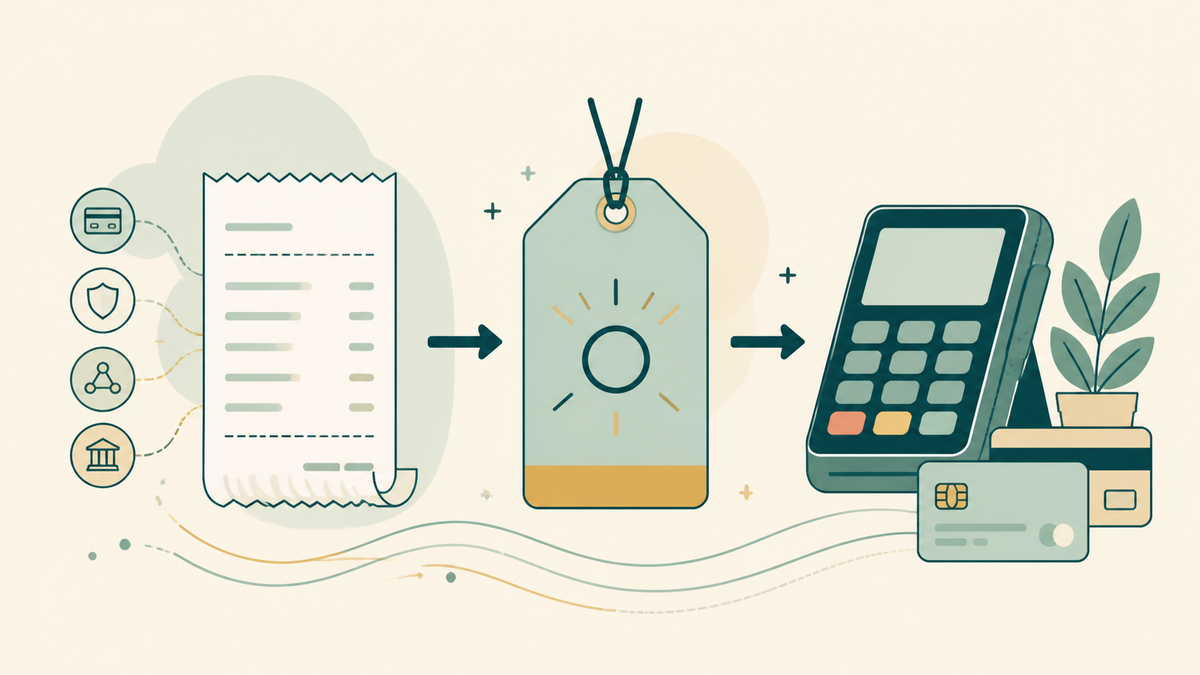
The complaint is about a few cents. The problem is about trust.
A card surcharge can look trivial on a receipt. It becomes much less trivial when the customer sees it only after choosing a payment method, cannot tell whether it is correct, or feels that the advertised price was not the price they were meant to pay. That is why the argument over card fees rarely stays technical. It becomes an argument about whether a business is being straight with its customers.
Australian community discussions show the pattern clearly. People complain about surprise fees, different rates for different cards, cashless businesses that still add a charge, and the work of checking a small extra line after every purchase. The strongest recurring request is simple: show one price and make the payment path understandable. This establishes a customer-friction pattern. Merchant willingness to pay for help still needs a direct test.
The operating change is concrete. The Reserve Bank of Australia says the designated card networks have decided to introduce no-surcharge rules for eftpos, Mastercard and Visa card payments from 1 October 2026. American Express has also decided to remove surcharging from that date. The RBA FAQ says merchants should check with their payment service provider because some providers may disable surcharge functionality. The ACCC guidance adds the practical jobs: review pricing, update customer-facing material, and make sure the terminal or other payment system is changed.
That creates a bounded service opportunity. A small operator can help a merchant assemble the information and implementation tasks that sit between a policy change and the everyday checkout. They should not sell legal advice, decide what a merchant is permitted to charge, handle customer funds, or promise savings. Their useful job is to make the merchant's own records usable, identify every place the surcharge appears, and prepare the right questions for the provider and qualified advisers.
Why an apparent price change is really several connected changes
The customer sees a menu, shelf label, booking page, invoice, or checkout screen. The business sees a more complicated chain: a point-of-sale setting, a card terminal, a payment link, a recurring invoice tool, a marketplace checkout, a service agreement, a provider statement, and staff who have learned a particular script. One change can leave the rest untouched.
That is the central MarketLens judgment. The accessible opportunity is not a generic payment audit. It is a transition check that finds mismatches between the merchant's price promise and its payment workflow.
The RBA's work on merchant-fee transparency explains why this is a real operational task. Its competition analysis says that transaction volumes and values, average transaction size, and card mix are needed for an accurate quote from another payment service provider. It specifically identifies debit versus credit, card-present versus card-not-present, and domestic versus foreign-issued cards as useful distinctions. A merchant cannot compare offers sensibly if those facts are buried across statements or unknown to the person asking for a quote.
The same work also makes the service boundary clear. A transition-check provider can collect and organise those inputs. The payment provider quotes its service. The merchant chooses its price. A qualified local professional answers legal, tax, or consumer-law questions. Keeping those roles separate is what makes the offer safer and more credible.
What a payment-cost transition check would actually deliver
The offer needs a narrow scope, a visible output, and a stop rule. A good first version has three deliverables.
First, build a payment-touchpoint inventory. List every place a customer can pay or see a price: physical terminals, online checkout, booking software, payment links, invoices, subscriptions, marketplaces, menus, price lists, signs, and confirmation emails. Note the system owner, the payment method, whether a surcharge setting exists, and the person who can change it. Keep the work to administrative mapping; regulatory interpretation belongs with qualified sources.
Second, make a provider-question brief from the merchant's own records. Gather a recent statement, contract, terminal or gateway fees, transaction-volume pattern, average transaction size, and available payment-method breakdown. The RBA says providers and merchants can use an understanding of statements and payment-cost drivers to assess payment needs and shop around. A provider can then explain its own pricing and settings using a complete fact set.
Third, create an implementation checklist. It should state which price displays, email templates, website pages, invoices, terminal settings, staff notes, and customer-service scripts need review. It should identify who owns each action and which questions require the payment provider or a qualified adviser. The checklist should never say that a fee is lawful, that a price increase is justified, or that a particular processor is best.
The difference between this and a vague consultancy offer matters. The merchant pays for a documented map and a cleaner handoff. Responsibility for the payment contract stays with the merchant and its provider. That is a defined outcome a small operator can deliver without building software or holding sensitive payment credentials.
Who pays, and why the economics can work
The likely buyer is a small merchant that takes payments through more than one route and has no single owner for the whole customer-payment journey. Cafes, salons, clinics, trades, studios, ticketed events, and service businesses can all have that problem, but the offer should begin with one niche. A salon with bookings, in-person taps, deposits, and payment links has a different map from a restaurant or a membership business.
The buyer pays a fixed project fee for a clearer transition plan, less staff guesswork, and a better-prepared conversation with its provider. The operator earns a one-time project fee. There may be a later implementation fee for non-regulated work such as updating approved website copy or training notes, but that should be separately scoped. Referral payments from payment providers can create conflicts, so any such relationship needs plain disclosure and should not determine the recommendation.
Large payment businesses show that merchants already pay for acceptance infrastructure, although they do not prove demand for a small transition service. In its 2025 annual report, Block reported USD 3.9 billion of Square gross profit, up 9 percent year over year. This is a segment-level result across Square's broad ecosystem and has no stated connection to Australian surcharge changes. It shows that payment acceptance, software, and related merchant services are established commercial layers with their own economics.
For a small operator, the relevant lesson is restraint. Do not compete with a processor on rates, build a payments platform, or promise that a provider switch will save money. The first offer is a preparation layer around a merchant's existing systems. Its value depends on whether the merchant has genuine confusion or scattered ownership, not on the size of a headline about payment reform.
The price decision needs a boundary, not a formula
The ACCC says businesses may reflect card-acceptance costs in their overall prices after the no-surcharge rules begin, but they must not mislead consumers about prices or the reasons for price increases. It also distinguishes payment-method discounts from card surcharges and says discounts need clear disclosure before a customer chooses to order or pay. Those details mean a checklist can help, but it cannot replace legal or provider guidance.
An operator should therefore frame the work as evidence preparation. The merchant decides whether to change a price, offer a payment-method discount, absorb a cost, or seek further advice. The operator records which path the merchant has selected and checks that the approved change has been carried through each customer touchpoint. If the client wants an opinion on consumer law, contract terms, tax treatment, or scheme rules, the work stops and the question goes to the appropriate qualified source.
This boundary also protects the customer. A person who has paid an unexpected charge needs a clear answer from the merchant's approved policy. The merchant should use its provider and applicable local guidance for the rule, then use the transition check to make the resulting experience consistent.
The smallest sensible test is five conversations and one manual map
There is no reason to buy terminals, make a comparison website, or build a dashboard before testing whether the offer is wanted. Start with five conversations in one merchant niche. Ask where customers see payment questions, who owns the terminal and invoices, how many systems take money, whether the business has a usable provider statement, and what would make a transition feel difficult. Ask for no passwords, customer data, or payment credentials.
If the same pattern appears in at least two conversations, offer one paid fixed-scope pilot. Use redacted statements and screenshots where possible. Deliver the three artifacts: touchpoint inventory, provider-question brief, and implementation checklist. Measure only observable outcomes: whether the client identifies a previously missed payment path, obtains a usable provider response, completes assigned changes, or asks for the same service across another location or business unit.
Stop if the work turns into legal interpretation, provider negotiation on the merchant's behalf, systems integration beyond the operator's competence, or a bespoke pricing strategy. Stop as well if every interview reveals a simple one-terminal business with no meaningful confusion. That result is useful. It says the problem is too small for a service and prevents an operator from forcing a generic audit onto clients who do not need it.
The opportunity is clarity work around payment systems
The Australian change is a useful example because it forces a visible decision, but the underlying problem is broader. Whenever a payment rule, provider setting, or price-display practice changes, small merchants can struggle to translate it across every customer-facing and back-office touchpoint. The customer complaint is a signal of that translation failure.
The best small service is therefore narrow and evidence-led: map the routes, organise the merchant's own data, prepare the provider conversation, and leave a clear implementation list. It creates value only when it removes real confusion. A provider who keeps that boundary can test demand cheaply and avoid drifting into regulated advice or an expensive software build.
Sources
- Reserve Bank of Australia: removal of payment surcharges FAQ
- Reserve Bank of Australia: competition in card acquiring services
- Australian Competition and Consumer Commission: card surcharges
- Block 2025 annual report
- AusFinance discussion of card surcharges