How Phone Trade-Ins and Refurbishment Create Value
A trade-in quote is only the first price in a longer chain. The economic value of a used phone is created by the people and systems that make its condition, identity, and future use more certain.

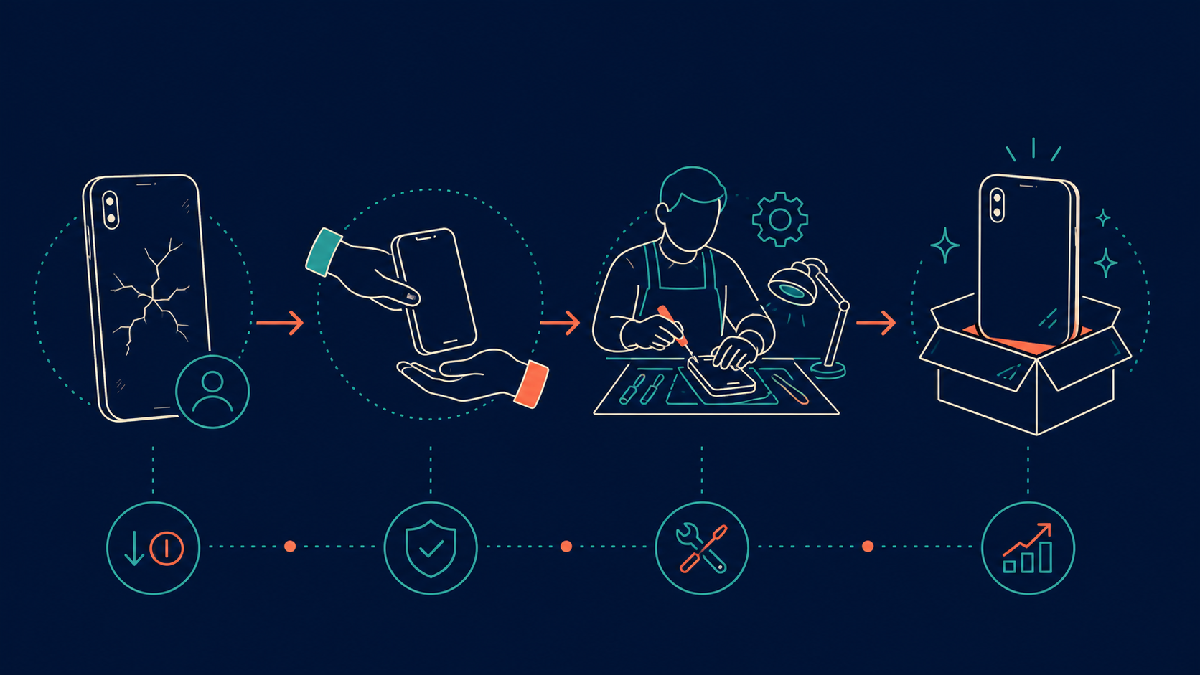
A Phone Changes Hands Because Each Party Wants Something Different
An owner trading in a phone often values speed, convenience, and an immediate credit more than the maximum possible resale price. A buyer of used inventory accepts the uncertainty of condition in exchange for a chance to recover value. The refurbisher earns its place by narrowing that uncertainty for the next buyer.
Apple's trade-in programme illustrates the basic mechanism: eligible devices can produce credit toward another purchase or a gift card. The programme helps reduce the upfront cost of a replacement and creates a managed path for a prior device. Other manufacturers, carriers, retailers, and specialist firms use variations of the same model.
The Steps That Turn Used Inventory Into a Product
The process begins with intake. The operator records model details, checks for ownership and activation locks, and assesses cosmetic and functional condition. A dependable operator must also manage data responsibly: customers need clear instructions to back up, remove accounts, and erase their device before it changes hands.
Diagnostic testing follows. Screens, cameras, microphones, speakers, ports, buttons, connectivity, biometric sensors, and batteries can all affect resale value. Some devices need cleaning, parts, or repair; others are economically better suited to parts recovery or recycling. The decision is a business one as well as an environmental one. Repair time, component cost, expected sale price, warranty exposure, and return probability determine whether refurbishment makes sense.
The device is then graded, priced, listed, packed, and shipped. A good grade is specific about appearance and does not conceal functional limits. A warranty and return process move some risk from the buyer to the seller, which is why a professionally refurbished phone can cost more than an informal private sale.
Where Money Flows
Money flows from the new-phone purchase into trade-in credit, from a reseller to the inventory source, and from the eventual buyer to a retailer or marketplace. Along the way, value may be captured by repair technicians, parts suppliers, logistics providers, payment processors, fraud-prevention services, insurers, and customer-support teams.
Marketplaces have their own model. eBay states in its annual report that its revenue is primarily derived from a take rate on marketplace gross merchandise value. A marketplace can therefore earn from enabling transactions without owning the phones. A refurbisher, by contrast, owns inventory and carries more condition, pricing, and warranty risk.
Neither model is automatically better. The marketplace model needs trust, liquidity, and strong seller controls. The inventory model needs disciplined buying, efficient testing, and careful management of returns.
A Small, Realistic Entry Point
For a local repair business, the most credible entry is usually a service rather than a large inventory purchase: trade-in assessment, secure data-transfer help, battery replacement, transparent diagnostics, and a limited set of familiar models. For an IT provider, it may be a device-retirement service for small organisations. For a publisher, it can be explainers that help readers understand grades, battery health, updates, and warranty terms.
Test demand before building stock. Speak to potential customers, choose one or two models with accessible parts, write an intake and inspection checklist, and calculate costs including returns and time. The goal is to learn whether the service reduces a real trust problem, not to imitate a large reseller's volume.
Final Takeaway
Refurbishment creates value when it converts uncertain used hardware into a clearly described, supported product. The profitable work is not simply buying low and selling high. It is verification, repair judgment, data handling, warranty management, and customer trust.