Fibery AI Agent Needs a Capability Map Before It Needs More Prompts
An AI agent can look capable in a demonstration and still leave a team unable to say when it should act. Fibery's own account of its agent rebuild points to a compact, sellable artifact: a capability map that makes one workflow observable and governable.

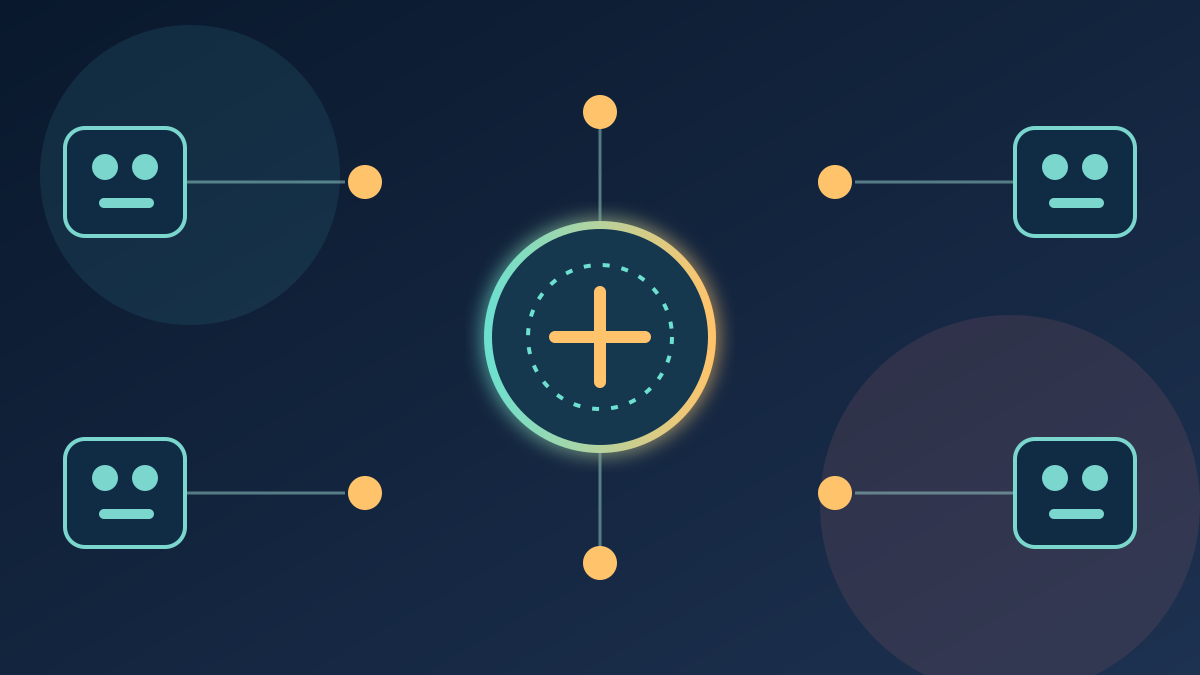
An AI agent becomes expensive long before its subscription price becomes the problem. The hidden cost arrives when a team cannot answer five ordinary questions: what starts the task, which information the agent may use, what it may change, who takes over when the case is unclear, and what proof remains after the work is done.
Fibery AI is a sharp example because Fibery has described the complaints in unusually plain language. In its AI Agent announcement, the company says people found the agent slow, uncertain about its own capabilities and prone to acting proactively in cases where it should not. The company rebuilt the architecture and added features such as response streaming, a stop control and model choice.
Those are meaningful product improvements. They do not automatically tell a small team which jobs belong to the agent. That missing layer creates a narrow service opportunity: help a team make one Fibery workflow legible before it gives an agent more freedom.
The product is not a giant AI transformation project. It is a capability-boundary map, tested against five real tasks and delivered as a short operating note. Its value is modest but concrete: a manager can see what to permit, what to prepare, what to route to a human and what to forbid.
A product rebuild does not answer a team's authority question
Fibery positions itself as a connected work platform, where databases, views, automations, documents and team processes can meet in the same workspace. That richness is useful, yet it makes a broad agent request difficult to predict. A request may touch project records, customer feedback, planning documents, a whiteboard and an automation at once.
Fibery explains that its earlier architecture used a router agent that delegated to area-specific agents. Passing the right context and deciding where to delegate was difficult because the platform is intertwined. The rebuilt approach uses dynamic tool loading, skills and a single agent capable of spanning those areas. The release also says users can watch the response stream and stop the agent without losing the work already done.
For a buyer, that is background rather than a decision rule. A faster reply can still be the wrong reply. An agent that can create a useful project view may not be the right actor to alter an automation, reorganise a product database or make a judgement call from incomplete feedback.
The practical question is therefore narrower: can this agent perform this named task under these conditions, with a visible route out when the conditions fail? A capability map turns that question from a hopeful prompt into an operational agreement.
The five boundaries that make an agent testable
The map has five fields. It is a MarketLens method derived from the reported problem. It is neither a Fibery feature nor an official certification.
- Trigger. Name the event or request that begins the work. “Prepare a weekly feedback summary after the review meeting” is testable. “Keep the product space organised” is too broad to govern.
- Permitted source. List the spaces, databases, document types or fields the agent may consult. If the task needs a missing source, record that dependency rather than letting the agent guess.
- Allowed action. State the one result the agent may create, edit or propose. A safe first boundary may be a drafted summary or a proposed field change, not a live automation edit.
- Human exception owner. Name the person who decides when the request contains ambiguity, sensitive material, conflicting records or a decision outside the agent's remit.
- Evidence output. Require a link, a list of records consulted, a draft, an activity note or another observable result. “The agent handled it” is not evidence a teammate can inspect.
The value lies in the combination. A task without a trigger becomes permanent background work. A task without a source boundary invites invented context. A task without an action boundary can expand from drafting into changing. A task without an exception owner creates delay and blame. A task without evidence leaves the next person unable to reconstruct what happened.
This framework also gives a team language for a useful answer: “the agent may draft from these three databases, but a product lead owns conflicts and approves changes.” That is more valuable than a long prompt with a vague instruction to be careful.
Five tasks reveal more than one impressive demonstration
A consultant can test the map in a client-controlled workspace or sandbox. The client operates the account and chooses what the observer may see. No credentials need to be retained, and the first session should avoid live external actions.
Choose five tasks from one workflow:
- a routine request with clean source records;
- a request that needs information from two allowed places;
- a request with an intentionally missing or contradictory field;
- a request that asks for a draft but could be mistaken for permission to make a live change; and
- a request that should be rejected or handed to the human owner.
For each task, record one of five outcomes: completed unaided, completed with prepared source material, approval required, unavailable, or prohibited. Add the response or record link as evidence. The exercise does not prove that the agent will perform perfectly in every future case. It does establish whether the team can describe the boundary it is relying on.
That distinction matters. A polished single demonstration usually starts with a clean request and prepared context. A five-task sample introduces ambiguity and a deliberately forbidden action, which is where operating rules earn their keep. If the same unclear boundary appears in three of the five tasks, that is a workflow-design finding rather than a reason to keep adjusting prompts.
Where money already flows, and where a small operator fits
Fibery sells work-management software through subscriptions and assigns Smart Agent call allowances across plans on its pricing page. The page also describes solution-architect support for mapping workflows. This is a useful reminder that the platform provider owns product development, account support, billing and the broad technical roadmap.
The established provider has advantages a small entrant should not try to copy: the product, access to the underlying architecture, support history and the ability to change the software. A generic freelancer should not claim to troubleshoot agent internals, certify a workspace as safe or promise that no unintended action can occur.
There is still an accessible layer. A product-operations specialist can sell a fixed-scope observation and decision artifact to a team that has already chosen Fibery but has not agreed on one agent workflow. The payer is a small product, research or operations team. They pay for a short session, a capability map and a clearly written exception list. The consultant earns a fixed project fee, while the client keeps control of its account and product choices.
The work earns a fixed service fee for observation and a decision artifact. It depends on trust and a clear niche. Someone who already works with product feedback, roadmap operations or workspace design will have a more credible route than a general AI promoter.
A compact offer has to stay compact
A sensible first offer could include one discovery call, one two-hour observed test, a one-page five-boundary map and an exception register. The client provides the task examples, performs any account changes and decides which records are visible. The final note should separate observations from recommendations: for example, “the agent drafted a summary from the feedback database” is an observation; “keep publication approval with the product lead” is a recommendation.
Set exclusions in writing. The offer should not include autonomous deployments, production automation changes, security promises, access to personal accounts, legal advice or retention of client exports. Workspaces may contain confidential customer or employee information, so the smallest version of the service should use a sandbox, redacted examples or client-operated screens. Teams need their own rules for handling data and access.
The economics are deliberately simple. One defined session and one defined document can be priced and delivered without inventory, paid advertising or a custom application. The operator should keep preparation time visible. If each client needs extensive integration work before the five tasks can be tested, the service has become implementation consulting and needs a different scope, skill set and price.
Validate demand with one paid, observed workflow
Begin with five conversations with people who run Fibery spaces or similar connected workspaces. Ask for the task they hesitate to let an agent perform and the moment they would want a human to step in. Listen for a named task and consequence, such as a feedback summary that could misrepresent a customer theme or a proposed workflow change that could disrupt a team.
Do not treat general enthusiasm for AI as a buying signal. A credible signal is a manager who can name a recurring task, agrees to supply five examples and wants a written boundary before expanding the agent's role.
Offer one pilot to such a team. Cap it at a single workflow and a two-hour session. Charge a modest fixed amount that covers preparation and the written output, or conduct one closely observed trial only if the participant agrees to give structured feedback. Success has two parts: the buyer changes a workflow rule, task definition or approval route based on the map, and says whether they would pay for the same exercise on another workflow.
Stop if every prospect expects a complete agent build, cannot identify a bounded task or needs the consultant to take unrestricted access. Those conditions indicate an offer that is too broad for a low-risk start.
A usable boundary is the result
Fibery's AI-agent rebuild addresses real product issues around performance, coherence and control. The remaining managerial work is to decide what an agent may do inside a particular workspace. That decision cannot be imported from a vendor release note or solved with a longer prompt.
For a small service operator, the viable opening is narrow: make one task observable, run five deliberately chosen cases and leave the team with a boundary it can use. The work has value when it reduces uncertainty about action, evidence and human ownership. It has no value when it becomes a vague promise to make an agent intelligent.
Sources
- Fibery AI Agent announcement
- Fibery pricing and Smart Agent allowances
- Fibery community discussion of model choice
- Fibery product report on agent speed and narrowed capabilities